The short version of 2026's design story? Warmth is back, cool gray is fading, and people want rooms that feel personal instead of copied from a feed. That's the whole mood of the year in one line.
You probably didn't come here for one line, though. Below is a fuller look at the design trends actually landing in Las Vegas homes this year, and, more usefully, what each one costs and how it behaves in a desert climate. We build these spaces for a living, so we've written the version we kept wishing existed: less inspiration board, more straight talk about the 2026 ideas that still look right past January.
The short version, before the details:
• Warmth wins. Honey-toned oak, clay, and warm greige are replacing gray and stark white in nearly every room.
• Character beats catalog. Fluting, arches, color-drenched rooms, and lived-in, collected interiors are the year’s defining moves.
• In the desert, specification is the trend. UV-stable finishes, honed stone for hard water, and real glazing decide whether a look lasts past three summers.
Most of the year's ideas trace back to three impulses.
Warmth is the first. After a decade of gray floors and white everything, people are reaching for honey-toned oak, clay, ochre, and soft brown. The second is authenticity: rooms that look collected over time rather than ordered in a single checkout. The third is quieter and more interesting — fewer, better things. One walnut console you love beats five pieces you tolerate.
Keep those three in mind and the rest of this list stops looking like a grab bag. It's the same instinct showing up in wood, in paint, and in how a room gets put together.
Picture the kitchen you walk into first thing on a July morning. The light in Las Vegas is hard and bright by 7 a.m., and against that glare a white-and-gray kitchen can read cold, almost clinical. Now swap in white-oak cabinets with a matte finish and a walnut island. The same light lands soft. The room becomes somewhere you'd linger with coffee instead of somewhere you'd wipe down and leave.
That's the pull behind natural wood this year. Not reclaimed-barn rustic, but refined grain, visible yet calm, usually paired with warm brass or matte black.
One desert note is worth knowing. South- and west-facing rooms take brutal UV, and cheap wood veneers and some stains amber and fade fast under it. Solid or engineered hardwood with a UV-stable finish is the difference between a kitchen that ages well and one that looks tired in three summers.
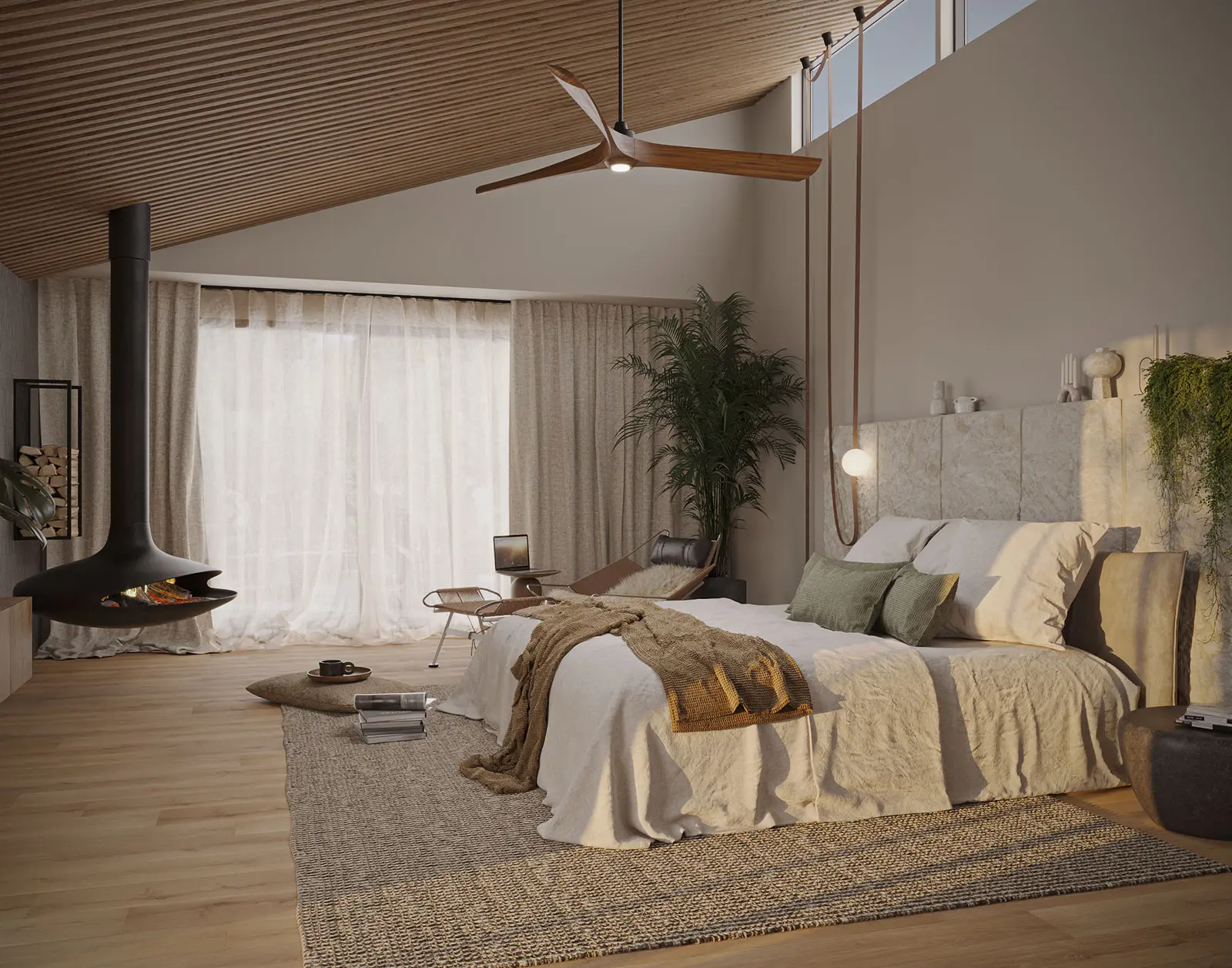
Think about what "safe and modern" meant in 2016: gray walls, gray tile, a white quartz counter, maybe a cool-toned LED strip. Clean, sure. Also a little lifeless, and now unmistakably dated.
2026 flips the temperature. The new neutral is warm — mushroom, greige, oat, soft clay, a putty that shifts with the light. Trim goes creamy rather than stark white. The effect is subtle on a swatch and obvious in a finished room: walls stop feeling like a backdrop and start feeling like a color.
For anyone planning to sell within a few years, this matters more than it looks. A warm-neutral home reads as current, while a cool-gray palette now quietly signals "last renovation was a while ago," even when everything else is fine.
This is where a flat wall becomes a feature without adding a single square foot. Fluted and reeded surfaces, those vertical ribbed panels, are turning up on kitchen islands and range hoods, bathroom vanities, fireplace surrounds and entry walls, and cabinet fronts in place of flat slab or shaker.
Alongside them, hard 90-degree corners are softening into arches: a curved doorway, a rounded niche, an arched shower opening. Together they add shadow and depth, which is exactly what a builder-grade tract home tends to lack. Most homes across Summerlin and Henderson were framed for efficiency, not character. Millwork is how you put the character back.
If you want the highest-impact, lowest-square-footage move of the year, pick one small room and drench it. Color drenching means painting walls, trim, ceiling, and sometimes the built-ins in a single deep shade — a muddy green, a dusty blue, a chocolate brown. Instead of a room with a "feature wall," you get a room that wraps around you. Powder rooms, home offices, and primary bedrooms are the usual candidates, since the goal is a cocooning calm rather than airy openness.
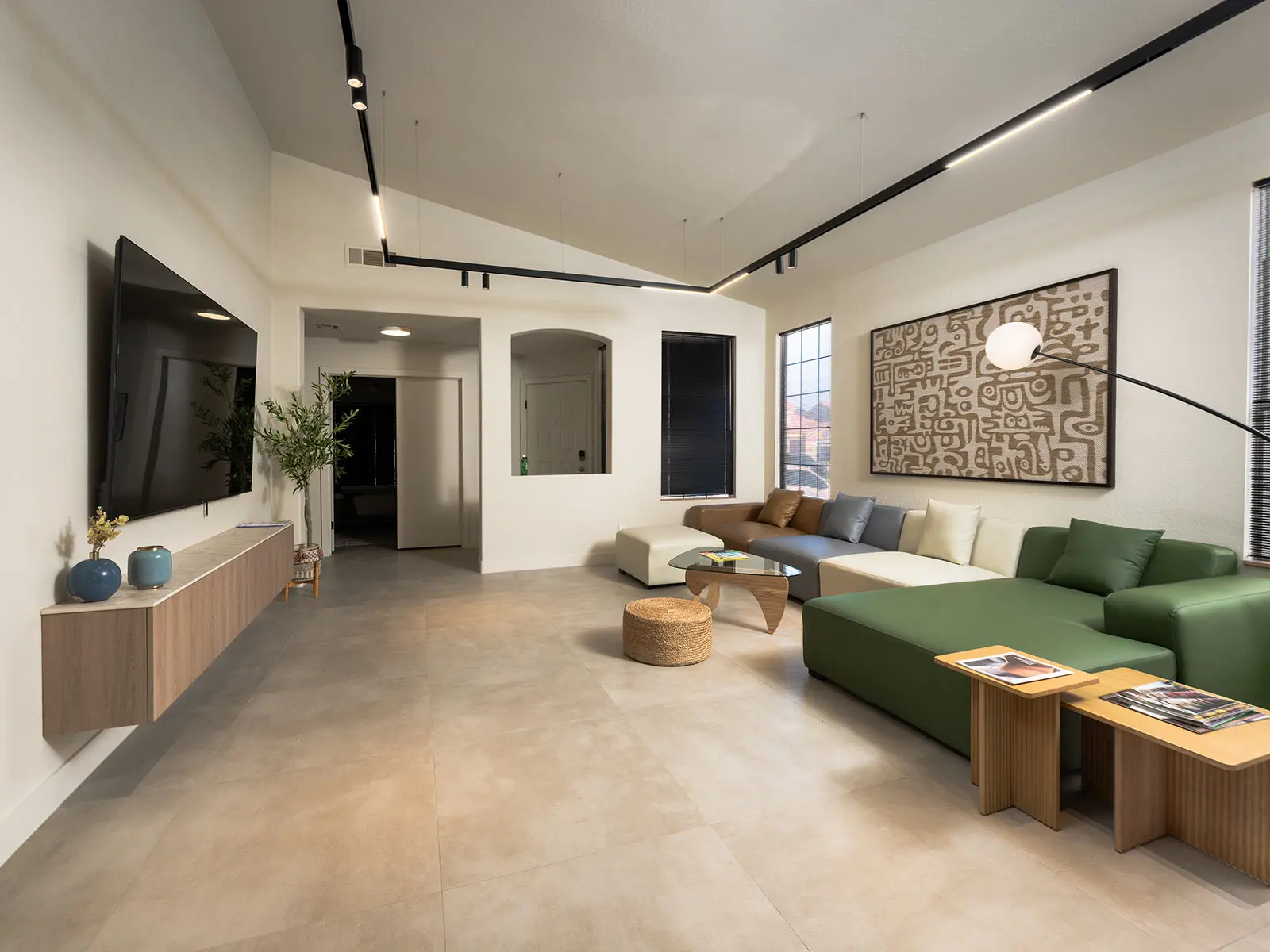
It's a weekend of painting and a few hundred dollars in materials. Few changes give back this much feeling for this little money.
"Lived-in" is not a polite word for cluttered, even if it sounds like one. The idea is that a room shouldn't look like it was assembled from a single store's catalog in an afternoon. Mixed materials do the work — a limestone counter beside an aged-brass faucet, a vintage rug under a modern sofa, pieces with some age and some story. It's the opposite of the identical, screenshot-perfect rooms everyone was building five years ago.
For a design-build project, this changes one thing on our side: we plan for it. We'll leave room in a scheme for the art you already own, the table you inherited, the thing you bought on a trip. A house that holds your belongings comfortably feels finished. One that fights them never quite does.
Plain white subway tile had a long, useful run. It's giving way to tile with actual personality: hand-painted patterns, zellige with its uneven glaze and handmade shimmer, bold geometrics behind a range or in a powder room.
There's a Las Vegas asterisk, though. Our water is genuinely hard, and it leaves mineral spots on everything. Highly polished or dark glossy tile in a shower shows every drop, which is why a lot of our clients land on honed finishes and a mid-tone grout that forgives water marks. You get the pattern you wanted without scrubbing it every other day.
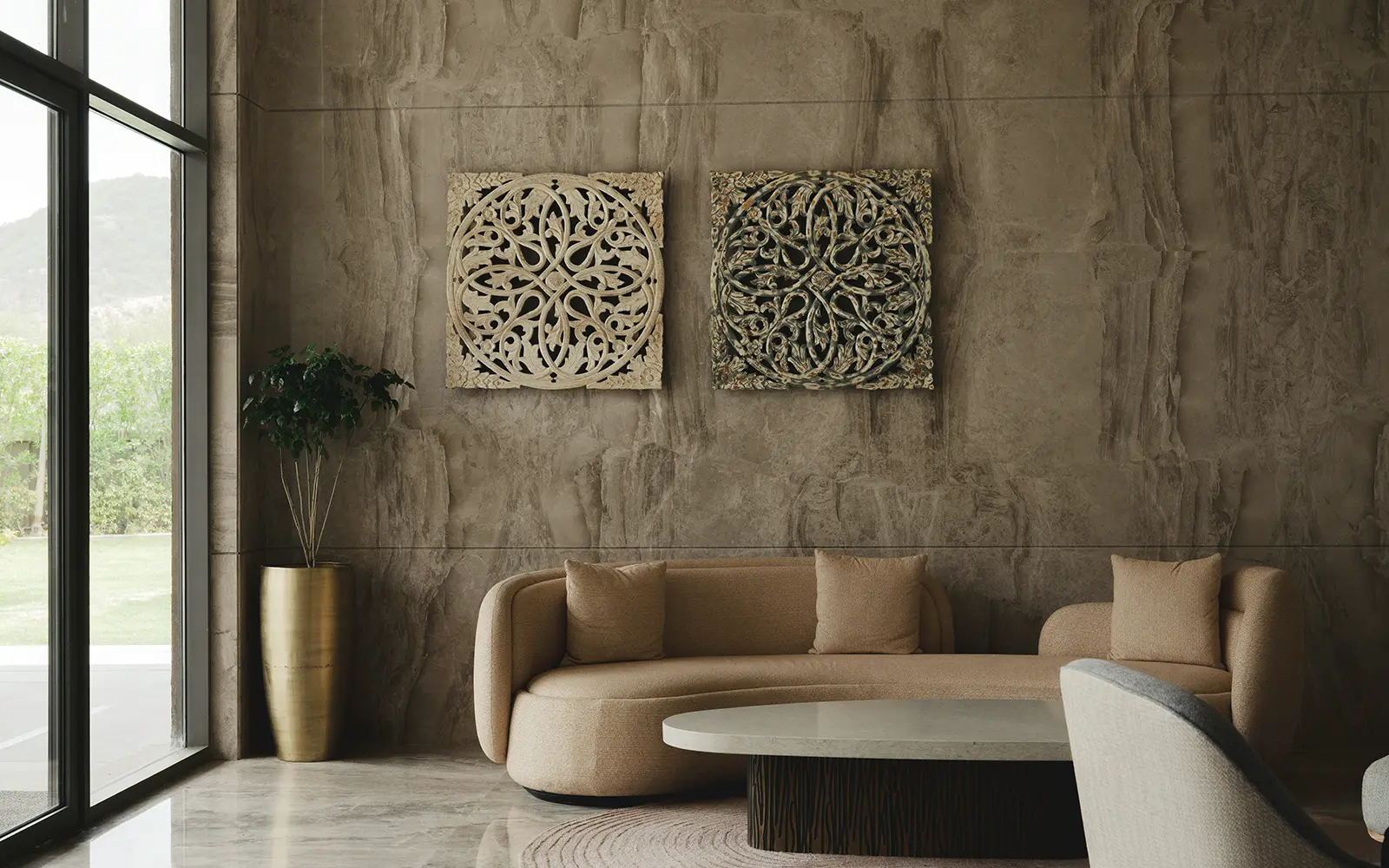
Straight lines are sharing the room with curves: rounded sofas, barrel chairs, kidney-shaped coffee tables, an arched floor lamp. One or two sculptural pieces carry it. A whole room of curves tips over into hotel lobby. Think of the curves as punctuation. The architecture stays mostly rectilinear, and the furniture is where the softness comes in.
The smart-home trend for 2026 is that you shouldn't see it. The appetite for glowing panels and gadget walls has cooled, and what high-end clients want now is technology that disappears into the design: motorized shades that vanish into a ceiling pocket, a leak sensor under the sink you'll never think about until it saves your floors, lighting that warms automatically after sunset, a thermostat that isn't losing to the July heat load. The tech is all there. It just doesn't announce itself.
If a remodel is opening walls anyway, this is the moment to run the wiring. Retrofitting later costs far more.
Sustainability in 2026 is less about looking eco and more about living better with less waste, which in a desert city is partly a utility-bill conversation. Low-VOC paints and finishes make a repainted room livable in hours instead of days of headaches. Better windows and insulation matter enormously here, because a west-facing wall of glass with poor glazing turns a living room into a greenhouse from June through September, and your AC pays for it every month.
Reclaimed wood and recycled-content stone show up too, but the truly desert-smart version of "sustainable" is the boring, invisible stuff: sealing, glazing, and insulation that keep the heat where it belongs.
At the higher end, the defining trends of 2026 aren't louder. They're deeper.
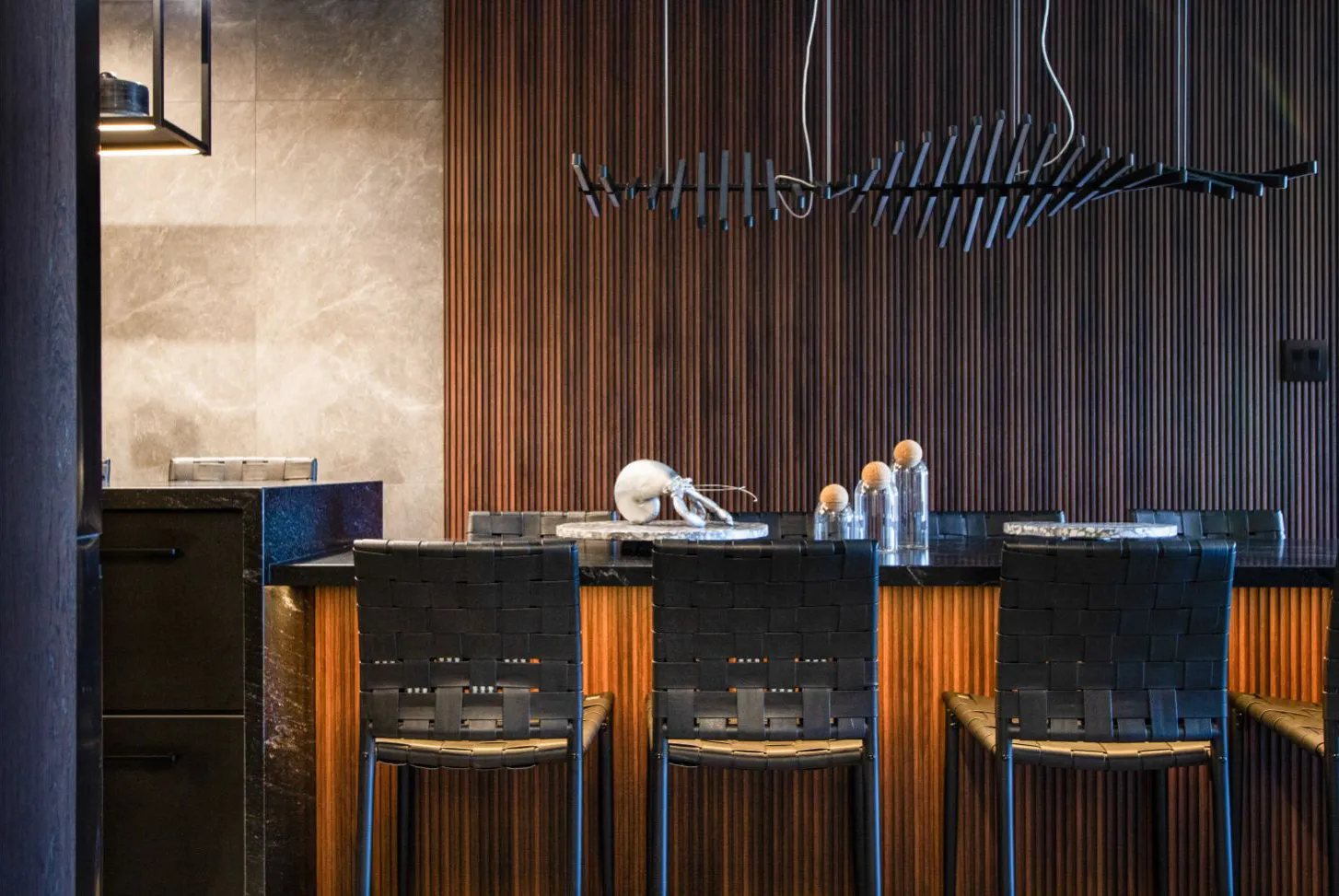
The tell of a high-end 2026 home isn't a bigger chandelier. It's material honesty and craft: full-height stone with the veining actually matched across a seam, integrated appliance panels so the kitchen reads as furniture, hand-troweled plaster walls instead of flat paint, solid-core doors that close with a heavy, quiet thunk. None of it shouts. All of it registers the second you touch it. The other luxury signal is coherence. Cheap renovations look assembled; considered ones flow. The brass on the cabinet pulls, the faucet, and the light fixtures belong to one family, the wood tones agree, and nothing looks bolted on. That coherence is hard to fake and easy to feel, and beyond the raw materials it's most of what separates a $40,000 kitchen from a $120,000 one.
If your taste runs contemporary, the 2026 version of modern keeps the clean lines and drops the coldness. In practice that looks like:
• Slab or lightly reeded cabinet fronts in warm wood, not high-gloss white.
• Waterfall stone islands in a warmer marble or quartzite, not stark white quartz.
• Matte black and warm brass hardware together, not chrome.
• One saturated accent, such as a deep-green range or a burgundy vanity, against a warm-neutral base.
• Hidden storage and integrated appliances so surfaces stay uncluttered.
Modern in 2026 is minimalism with a pulse. The restraint stays. The chill goes.
Zoom out to the whole house, and a few patterns hold acrossnearly every project we take on here.
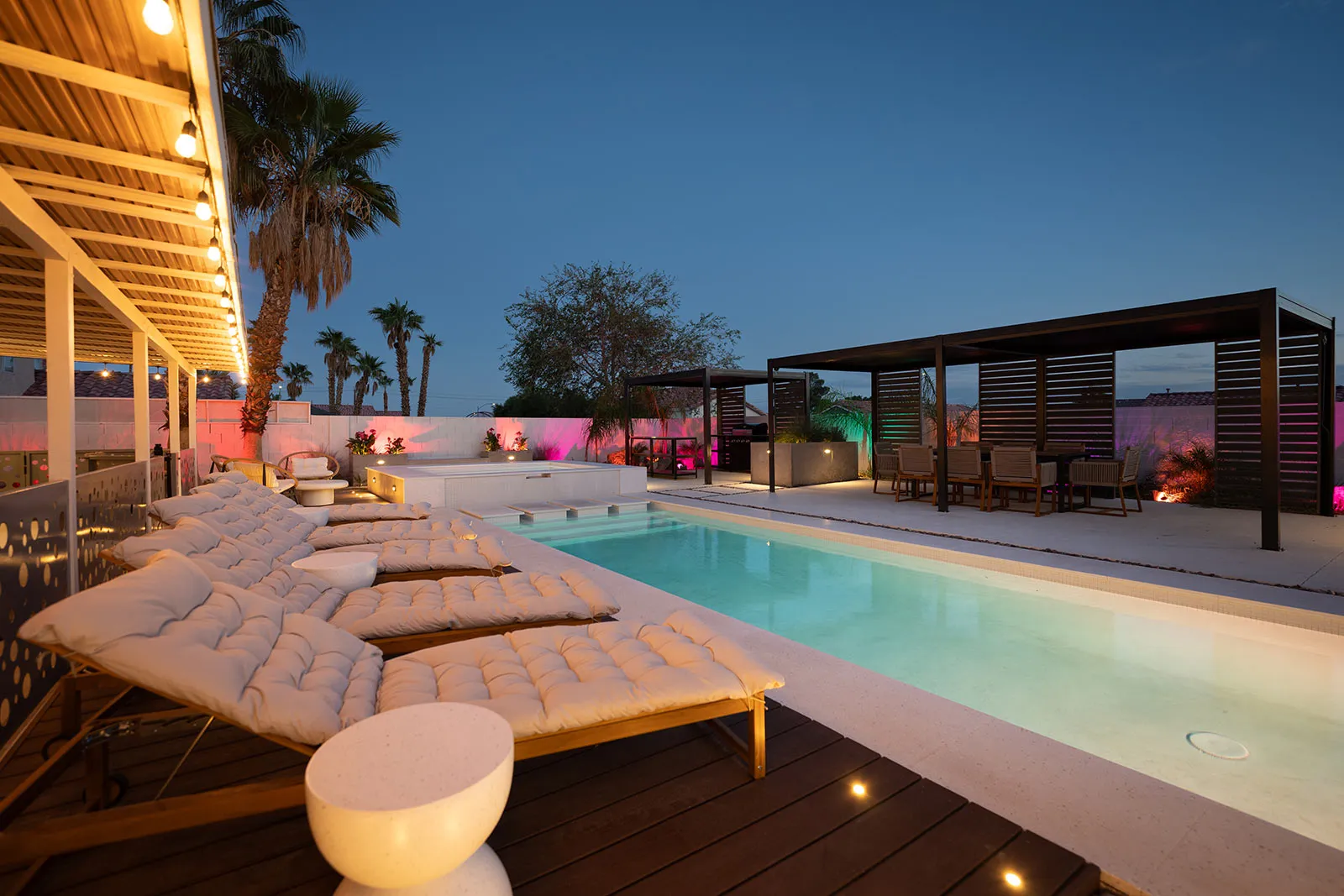
Open-concept is being gently walled back in. After years of one giant great-room, people want defined spaces again: a real office with a door, a proper dining room, a scullery off the kitchen. Primary suites are getting the cocoon treatment. And outdoor living keeps growing, because in Las Vegas a covered patio is comfortable for much of the year, and a good one works as another room.
The through-line is homes shaped around how a household actually lives, day to day, rather than around a floor plan that photographs well empty.
National trend lists rarely mention that a trend has to survive where you live. Ours does.
Three local realities quietly decide whether a trend ages well here. UV fades and ambers materials on the sunny side of the house, so finish quality on wood and textiles matters more than the trend itself. Hard water spots glossy tile and glass and shortens the life of unsealed stone. And the summer heat load makes glazing, shade, and insulation part of any honest "sustainable" plan. Pretty is easy. Pretty that lasts through a Vegas summer takes the right specification.
A large share of valley homes came out of the same handful of builder plans: efficient, boxy, light on detail. That's actually good news for 2026's trends. Fluting, arches, warm color, and millwork are exactly the tools that add soul to a plain shell, and they read as high-impact precisely because the starting point was so blank.
Most interior work here needs no outside approval. But anything touching the exterior, a footprint change, or major systems will run into HOA architectural review and Clark County or City of Las Vegas permitting, and those timelines are real. Structural changes, electrical work, and plumbing relocations need permits and inspections. We handle that paperwork as part of the build, which is a big part of why design-build exists: one team carrying the project from drawing to final sign-off, instead of you chasing a designer, a contractor, and an inspector separately.
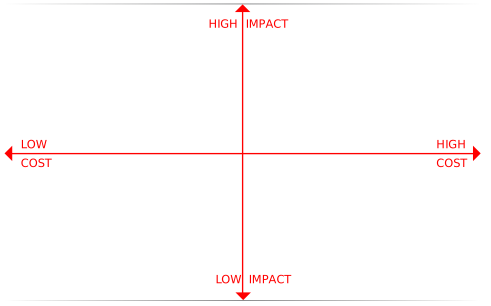
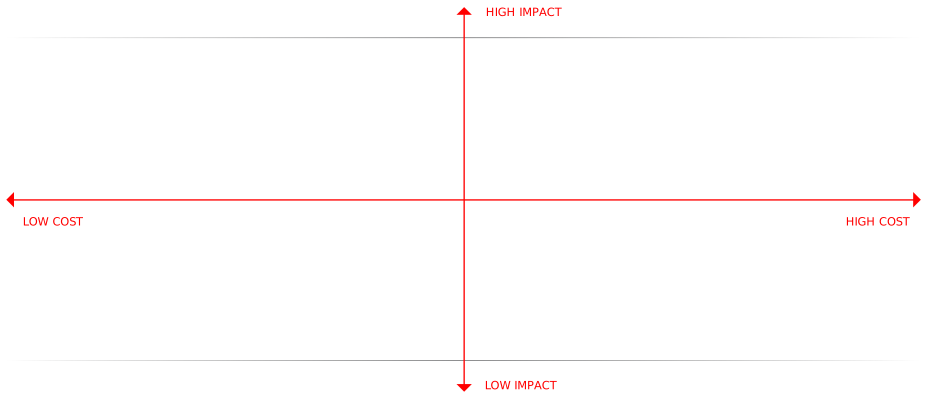
Real numbers, with a real caveat: these are broad valley ranges, and your actual figure depends on size, materials, and condition.
For national context, the
2026 Houzz & Home Study puts the median planned U.S. renovation spend at about $15,000 for 2026, down from $20,000 the year before, as owners get a little more deliberate. High-end and whole-home projects run well above that. Here's roughly how the year's trends stack up locally:
• Color-drenched room: a few hundred dollars in paint and a weekend. Highest feeling-per-dollar move on this list; adds appeal, not resale value.
• Warm-neutral repaint, whole home: low four figures. Mostly a "reads as current" play for future sellers.
• Statement backsplash or feature tile: low-to-mid four figures installed, depending on the tile and the wall.
• Fluted millwork and arches: mid four figures and up per feature; where the character comes from in a plain builder shell.
• Warm-wood kitchen: typically starts around $25,000 and climbs with custom cabinetry and stone.
• Full-home, trend-forward renovation: roughly $120,000 and up.
The pattern is worth reading twice. The cheapest changes buy the most feeling per dollar; the expensive ones are where resale value actually moves. Both are valid. They just answer different questions.
Not everything on this list deserves a permanent, structural commitment. Here's the line we draw with clients.
Commit real money — cabinets, tile, stone, layout — to the things that are expensive to change and will still look right in ten years: warm natural wood, honed stone, quality millwork and arches, good glazing and insulation. Keep it light — paint, textiles, decor, furniture — for anything you're only 80% sure about: a bold drenched color, this year's exact tile pattern, the sculptural chair. If it's cheap and easy to swap, you're allowed to chase the trend.
The mistake we see most often is committing structural money to a look that's already peaking. Put the trend where it's easy to undo, and put the money where it lasts.
We work as design-build, which means one team owns the whole arc instead of handing you between vendors. In practice it runs like this:
a free consultation, then a 3D rendering so you see the room before anything's demolished, then
design and material selection together, then permitting, then construction, and finally a walkthrough where we make sure it's right. You approve the look on screen first, which means fewer surprises, one point of contact, and a fixed scope instead of a moving number.


.png)